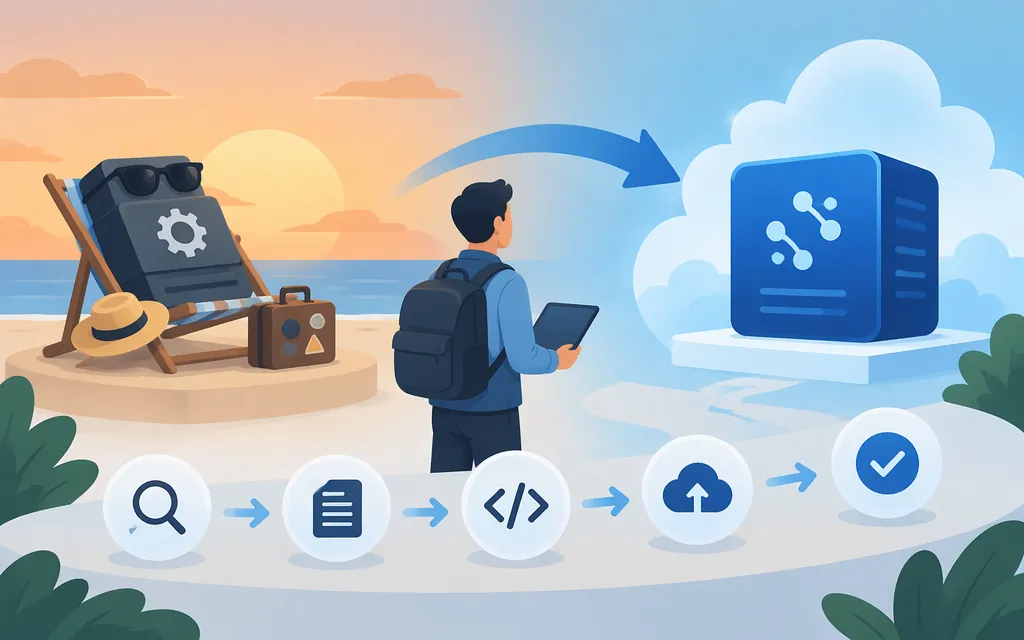
Kimi K2.5 is no longer available through Moonshot’s API platform. Moonshot’s documentation says it was retired across the platform on August 31, 2026. If your application calls K2.5 through Moonshot, plan to migrate rather than build a new production integration around that model. The retirement notice concerns Moonshot’s own platform; a separate provider may have its own catalog and availability terms. (platform.kimi.ai)
Is the Kimi K2.5 API still available?
No—not on Moonshot’s API platform. The official model list labels kimi-k2.5 as deprecated, and Moonshot’s OpenClaw guidance gives the more specific status: K2.5 was retired across the platform on August 31, 2026. The retirement notice does not establish availability on third-party services, which operate their own endpoints and model catalogs. (platform.kimi.ai)
That distinction matters if you have an old integration. A model name remaining in your code or deployment configuration does not mean Moonshot still serves requests for it. Before troubleshooting, confirm which provider receives the request and which model identifier it accepts.
What should you use instead?
Moonshot’s current model list displays kimi-k3.1-pro, kimi-k3.1-pro-highspeed, and kimi-k3 as available models. Its OpenClaw setup guidance specifically recommends the official Moonshot provider with moonshot/kimi-k3.1-pro as the default model for that application. This is a documented option for OpenClaw—not a guarantee that K3.1 Pro is a drop-in replacement for every K2.5 integration. Confirm the model is available to your account and suits your workload before switching traffic. (platform.kimi.ai)
A safe migration checklist
- Identify the provider and model in use. Check your environment variables, application configuration, SDK setup, and gateway settings. Record whether requests go directly to Moonshot or through another provider.
- Choose a currently listed model to evaluate. Start with a candidate that fits your workload; do not assume its identifier, capabilities, or compatibility match K2.5.
- Follow the provider’s current setup guide. Moonshot’s API documentation describes OpenAI-compatible Responses API and Anthropic-compatible Messages API access. Use its current Quickstart and API overview for the supported model, account, and client configuration. The captured K2.5 retirement material does not provide a working K2.5 request example, and it would be misleading to present one as usable. (
platform.kimi.ai) - Test your application before production cutover. Run representative prompts and check the parts your product depends on—such as tool calls, structured output, multimodal inputs, error handling, latency, and token usage. These are migration checks, not claims that the replacement behaves exactly like K2.5.
- Move traffic gradually. If your deployment supports it, compare the candidate against your existing evaluation set or route a limited share of traffic first. Keep a rollback path until the new model meets your application’s acceptance criteria.
Can I keep using a K2.5 endpoint or API key?
Moonshot’s notice says K2.5 was retired across its platform; it does not document an exception for existing accounts. Do not rely on an old key, endpoint, or model ID as evidence of continued service. If your application uses a third-party API provider, check that provider’s own model listing and retirement policy: Moonshot’s platform notice does not establish another provider’s availability.
What about K2.5 API pricing?
Do not use a historical K2.5 price as a current budget estimate for Moonshot API traffic: the model has been retired there. The official pricing documentation covers current model inference pricing; check it for the model and account you actually plan to use. (platform.kimi.ai)
Bottom line
For the Moonshot API, Kimi K2.5 is retired as of August 31, 2026. Verify your provider, select a model currently listed as available, follow that model’s current API setup documentation, and test your real application before migrating. Moonshot’s OpenClaw guide names K3.1 Pro for that specific setup, but the available documentation does not establish a universal K2.5-to-K3.1-Pro drop-in migration. (platform.kimi.ai)
Sources
Use Kimi in OpenClaw — Kimi API Platform
Model List — Kimi API Platform
Quickstart — Kimi API Platform