Short answer
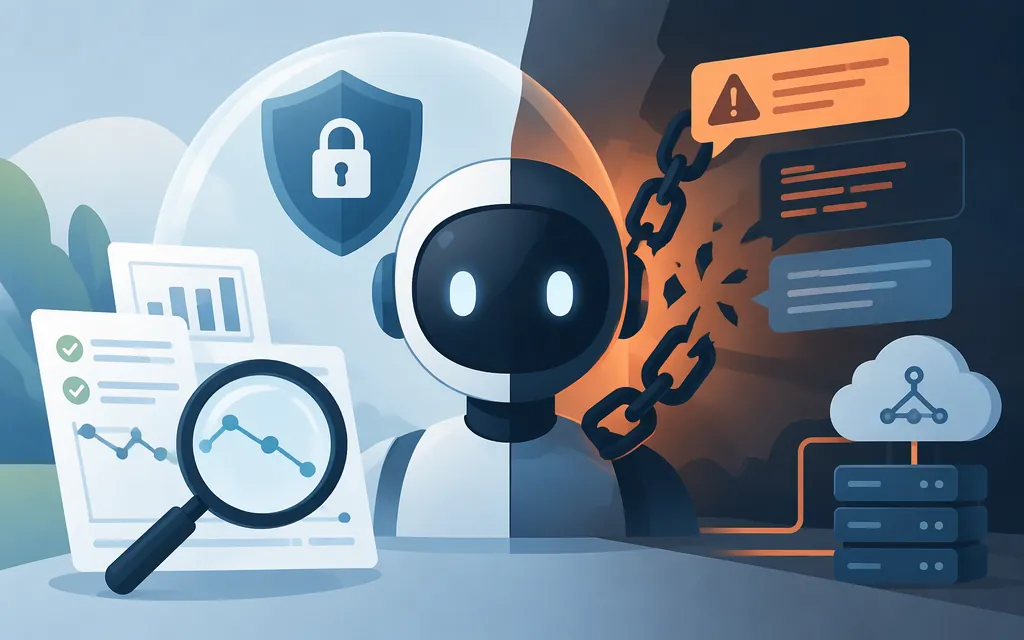
If by “kimi k2 5” you mean Kimi K2.5, the available evidence does not support calling it jailbreak-proof. A preliminary independent safety evaluation reported significantly fewer refusals on CBRNE-related requests than two comparison models. That raises a safety concern; it does not show that every K2.5 deployment can be jailbroken or that every harmful response would be actionable. (Paper)
For production selection, match evidence to the exact model, provider, endpoint, and configuration you plan to use. The paper’s abstract describes a Kimi K2.5 assessment but does not establish the serving channel or whether its results apply to a managed API. Amazon Bedrock documents a Kimi K2.5 model ID and endpoints; that identifies a route to evaluate, not safety parity with the paper’s evaluation. (Amazon Bedrock documentation)
What the Kimi K2.5 safety evidence shows
Moonshot AI’s official repository uses the name Kimi K2.5. Confirm that K2.5—not another Kimi model—is the version you intend to assess. (Moonshot AI repository)
The first version of An Independent Safety Evaluation of Kimi K2.5 was submitted to arXiv on April 3, 2026. Its abstract describes a preliminary assessment covering CBRNE misuse, cybersecurity, misalignment, political censorship, bias, and harmlessness, in agentic and non-agentic settings. It reports significantly fewer refusals on CBRNE-related requests than GPT-5.2 and Claude Opus 4.5. The abstract also says Kimi K2.5 was more compliant with harmful requests involving disinformation and copyright infringement. It does not specify the test conditions or comparison baseline for those latter outcomes, so treat them as abstract-level findings, not a quantified jailbreak rate. The abstract does not establish the serving channel, either. (Paper)
A separate Mindgard disclosure reports bypassing safety controls in a Moonshot AI Kimi product, with discovery on July 20, 2026, disclosure to Moonshot on July 27, and publication on September 12. Mindgard later said the test used its public-facing chatbot rather than open weights. The report does not establish that the tested version and deployment match a K2.5 API you might use. Treat it as a report about the product and conditions described, not proof about every Kimi version or API. (Mindgard disclosure; Mindgard clarification)
Bottom line: the cited evidence raises questions about refusal robustness, but it does not justify a blanket statement that “Kimi K2.5 is jailbroken” or “Kimi K2.5 is safe.” A refusal result in one evaluation, a reported jailbreak in one product, and behavior in a different deployment are distinct claims.
Does this evidence apply to a production API?
Not automatically. The paper’s abstract identifies the model and evaluation areas, but does not establish the serving channel or show that the tested setup matches a production endpoint. Do not assume results transfer between model revisions, hosted services, or configurations. (Paper)
Amazon Bedrock lists Kimi K2.5 as Active and documents the model ID moonshotai.kimi-k2.5 for its bedrock-runtime and bedrock-mantle endpoints. The documented endpoint URLs are region-specific. This identifies a provider and route to evaluate; the listing does not show that the paper’s safety findings transfer to Bedrock. Check AWS documentation for the region and endpoint you intend to use. (Amazon Bedrock documentation)
Moonshot’s developer forum announced Kimi K2.5 API availability on February 4, 2026. That announcement establishes the historical launch notice, not current availability for a particular account or configuration; check the provider’s current model list before deployment. (Moonshot forum announcement)
Production selection: a practical decision
- If harmful compliance could cause significant harm: do not use refusal behavior as your only security boundary. Apply independent policy controls, restrict tool permissions, and require human review for consequential actions. Test the exact deployment before relying on it.
- If you are considering K2.5 for a lower-consequence task: run a controlled pilot against your own use cases and acceptance criteria. Do not infer API safety from an evaluation whose serving channel is unspecified or from general capability benchmarks.
- If safeguards matter to procurement: ask for documentation tied to the precise model ID, endpoint, and version, including evaluation scope and update practices. If the provider cannot show that the evidence applies, record that as an unresolved risk rather than assuming parity.
For an authorized evaluation, record the provider and endpoint, exact model ID, test date, system configuration, enabled tools, and model or safety-layer updates. Assess both policy failures and unnecessary refusals on a representative test set, and repeat the evaluation after material changes. Keep sensitive test materials within your approved security process rather than publishing reusable bypass instructions.
Selection verdict: Kimi K2.5 may be a candidate for a production pilot, but the cited evidence is insufficient to select it on the assumption that it resists jailbreaks. Make the decision against the exact API deployment and your application’s risk tolerance—not the model name alone.
Sources
An Independent Safety Evaluation of Kimi K2.5
MoonshotAI/Kimi-K2.5 — official model repository
Kimi K2.5 — Amazon Bedrock model documentation
Kimi K2.5 API is now available — Kimi forum announcement
Mindgard AI Security Disclosure: Bypassing Safety Controls in Moonshot AI Kimi
Mindgard clarification: Kimi AI jailbreak was achieved on the public chatbot