As of November 10, 2026, the OpenAI Sora API is discontinued: OpenAI lists September 24, 2026 as its discontinuation date. That means a new production integration cannot rely on OpenAI’s Sora API for video generation. The official documentation reviewed here does not establish an OpenAI API for removing watermarks from existing Sora 2 videos either. This does not prove that no independent video-processing service exists; it means you should verify any third-party service on its own merits rather than treating it as a current OpenAI Sora integration. (help.openai.com)
Watermark removal is not watermark-free generation
These are different workflows:
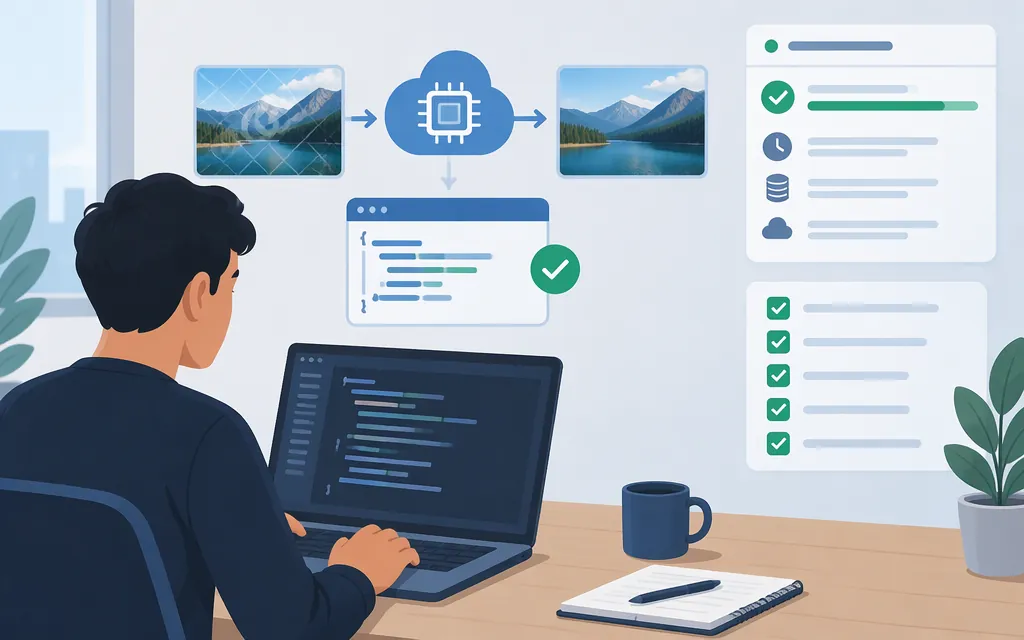
- Removal takes an existing video as input and returns a modified video. A provider claiming this capability should document its video-upload method, supported formats, output, and production limits.
- Watermark-free generation creates a new video and makes a claim about that generated output. It does not show that the service can process a video you already have.
- Provenance checking looks for signals that may indicate where media came from. It does not remove a visible mark or certify that a video is authentic when no signal is found.
That distinction matters when evaluating older search results. A reviewed CometAPI article described generating videos through a third-party Sora 2 API and claimed that its outputs had no watermarks. It did not document a remover for existing files, provide integration instructions, or clarify whether the claim covered embedded provenance metadata as well as visible marks. The article also claimed a price of “20% of the official price,” but gave no currency, billing unit, or rate table. Treat these as unverified claims, not a current product specification or price quote. The Sora API discontinuation makes it especially important to ask what model and service a provider currently operates. (help.openai.com)
What the reviewed remover project documents
A reviewed GitHub repository describes a Sora 2 watermark-removal project and tells users to run a Colab script. Its page shows an MP4 source filename and an out.webm output filename. The captured page does not document an API endpoint, authentication, request or response schema, service operator, or production availability. Those filenames are an illustration on the page—not a reproducible API example or proof of output quality.
Practical takeaway: a script or notebook may be a separate, self-run project, but it is not evidence of a hosted, production-ready API. Confirm the current project documentation and operating model directly before building against it.
OpenAI’s provenance API is for checking, not removing
OpenAI documents a Content Provenance API endpoint, POST /v1/content_provenance_checks, for checking supported provenance signals in images and audio. The documentation describes C2PA Content Credentials and SynthID checks; it says visible watermarks and labels are separate from the signals this API checks. It is not a video watermark-removal API, and a not_detected result does not prove that media was not AI-generated. (developers.openai.com)
For a video workflow, do not send a video to this endpoint expecting it to remove a mark or verify the video: the documented inputs are image or audio files, not video. If your actual need is provenance review, use a tool whose documentation explicitly supports the media type and signal you need to check.
Production checklist for evaluating another service
Before integrating a third-party candidate, require provider-authored documentation that answers these questions:
- What does it do? Does it accept an existing video and return an edited file, or does it only generate new videos?
- What exactly happens to provenance? Ask separately about visible marks and embedded metadata. Do not treat “no watermark” as a precise technical statement unless the provider defines it.
- Can you integrate it reliably? Look for the base URL and version, authentication, request and response schemas, supported formats, size or duration limits, error behavior, and production availability.
- How are uploaded videos handled? Check documented retention, deletion, access, and processing terms against your own requirements.
- What will it cost? Confirm the current currency and billing unit—such as per video, per minute, or subscription—and any tier limits before purchasing. No verified current price for a Sora 2 remover is established by the sources reviewed here.
- Is the workflow allowed for your use? Review the provider’s terms and the rules applicable to your intended use and jurisdiction; do not rely on an unspecified claim that restrictions are “more lenient.”
Bottom line: the OpenAI Sora API has been discontinued, and the reviewed sources do not establish a current, documented Sora 2 watermark-remover API. Treat third-party offers as separate services. Do not build a production integration or make a purchase decision until the provider documents the exact existing-video workflow, provenance behavior, operating terms, and price.
Sources
What to know about the Sora discontinuation — OpenAI Help Center
Content provenance — OpenAI API
Create content provenance check — OpenAI API Reference