Model comparisons
Claude vs Claude Pro: Free Plan, Subscription, and API Compared
Compare Claude Free and Pro for personal use, check current U.S. pricing and billing terms, and see why a Pro subscription is not the same as production API access.
AI model and infrastructure insights
Compare Claude Free and Pro for personal use, check current U.S. pricing and billing terms, and see why a Pro subscription is not the same as production API access.
No confirmed GPT-5 parameter count was established in the sources reviewed. See what third-party reporting says and what to compare when choosing a production API model.
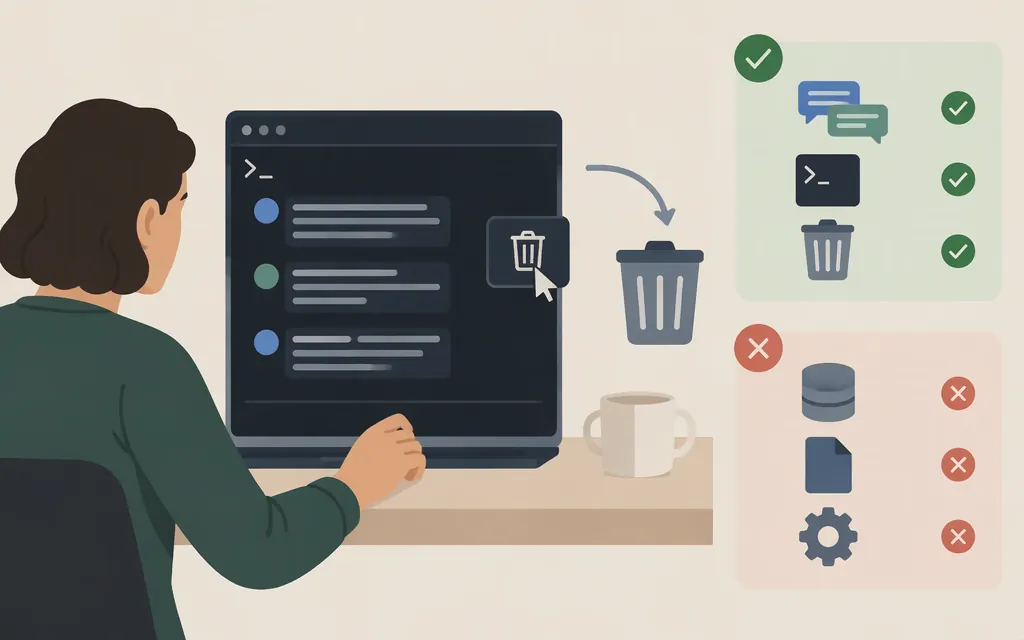
Learn what /clear and /compact do in Claude Code CLI, where session transcripts are stored, and why the documented project purge is too broad for deleting one conversation.
Suno’s official pricing page lists Free at $0, Pro at $10 monthly or $8/month billed yearly, and Premier at $30 monthly or $24/month billed yearly. Compare credits, billing terms, and what the prices do—and do not—say about production API use.
Understand what the FLUX image-model family does, compare FLUX.2 options by use case, and learn what to verify before using one in production through an API.
Compare Claude chat, Claude Code, the Claude API, and Cursor. See which fits coding in an IDE, running a coding agent, or building a production application—and how their costs differ.
Find Anthropic’s Claude Code hooks guide and reference, see a documented Notification hook starting point, and distinguish Claude Code hooks from direct Messages API workflows.
Compare Claude Sonnet 4.5 and GPT-5 for API workloads: model IDs, lifecycle status, listed token prices and limits, plus what a narrow coding test can—and cannot—tell you.
Z.ai documents GLM-5.3-Flash, but the available evidence does not establish “GLM-5 Flash” as its official name or alias. See the documented model’s capabilities, Z.ai API access, and listed token prices.
What GLM-4.6 is suited for, its documented context and API details, Z.ai’s listed token prices, and what to verify before choosing it for production.
The API’s Free-tier listing is not proof of free credits. Learn how to distinguish usage limits, prepaid credits, and eligible complimentary credits—and how to estimate API costs.
Compare Gemini CLI’s documented Auto presets with a Manual preview candidate, learn how to select a model, and check its API counterpart and production eligibility.
ChatGPT is free, but OpenAI’s current Free-tier FAQ lists GPT-5.6 Luna—not GPT-5.2. See what GPT-5.2 API use costs and how it differs from a ChatGPT subscription.
Compare OpenAI’s Realtime voice, translation, and transcription options by use case—and see what model IDs and API details to confirm before building.
Learn when to use Claude chat versus the Claude API, complete a first chat task, and make a minimal API request with a securely stored key.
OpenAI discontinued the Sora API on September 24, 2026. Here’s what that means for new integrations, older documentation, and third-party Sora API instructions.
Learn how to clear saved memories in ChatGPT, how that differs from turning Memory off or deleting chats, and why API integrations need separate state management.
Suno says one generation costs 10 credits and returns two songs—about 5 credits per song by simple arithmetic. Here’s what that means for free credits and API costs.
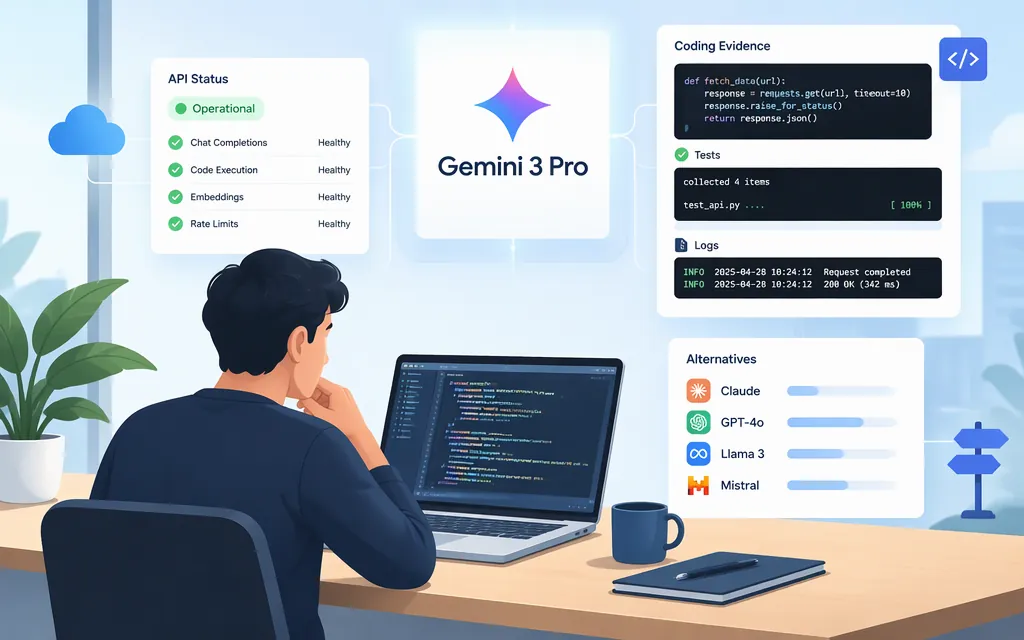
Google shut down the Gemini 3 Pro Preview API identifier on March 9, 2026. Review the attributed coding evidence, current API route, costs, and trade-offs to test before choosing a model.
Runway Free includes 125 one-time credits, but Gen-4 access depends on the models enabled for your account. Compare subscription credit allowances and see separate Gen-4 Turbo API pricing.
There is no verified 2025 annual total in the sources reviewed. See the published per-query estimate, a clearly labeled back-of-the-envelope calculation, and why it should not be applied directly to API usage.
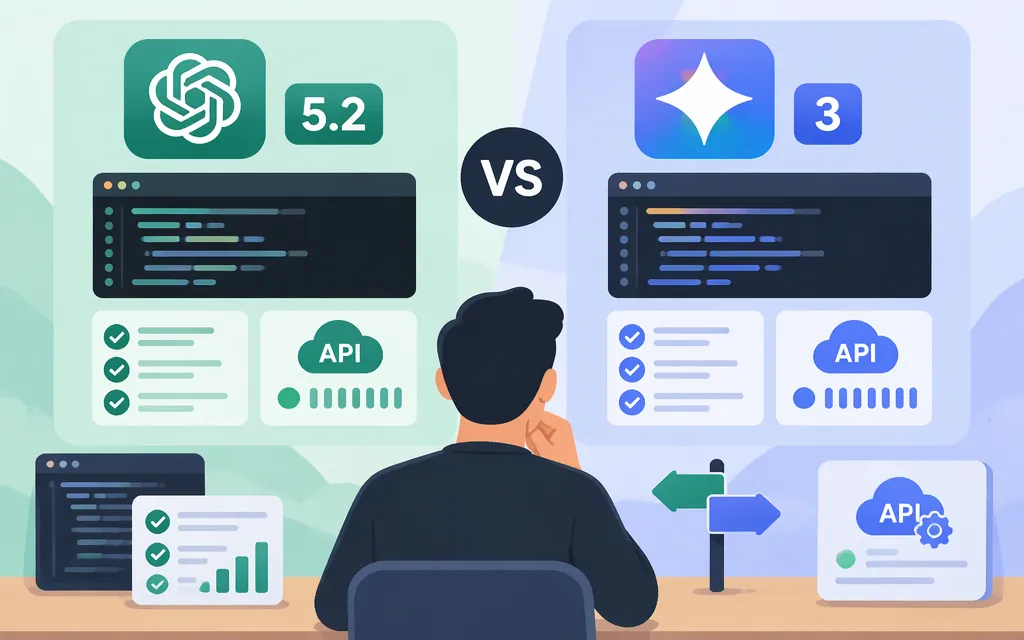
Compare GPT-5.2 with Gemini 3 for coding and API use. Review the limits of a three-task coding comparison and the API details that remain unconfirmed.
Find the official Claude Code web experience, see who can use cloud sessions and how to start one, and decide when your application needs the Claude API instead.
Find the Claude Code installation you use, remove it with a matching command, and decide separately whether to delete settings or project data.